Trick Advantages of Using Steel Spreadings Throughout Various Markets
Metal castings act as a vital part in various sectors, using unique advantages that enhance efficiency and effectiveness. Their style flexibility enables for detailed shapes, while their product homes add to general toughness. Cost-effectiveness and sustainability additional underscore their importance in contemporary manufacturing. As markets proceed to progress, understanding the complete scope of advantages offered by steel castings comes to be necessary for tactical decision-making. What effects do these advantages hold for future technologies?
Improved Design Versatility
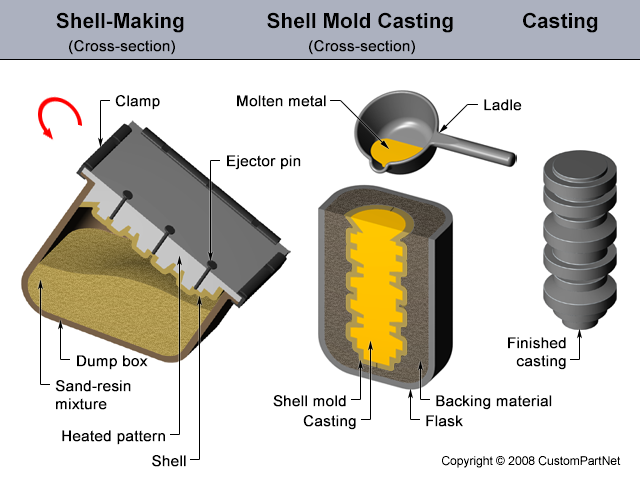
Although conventional manufacturing methods frequently impose limitations on style intricacy, steel castings provide remarkable versatility that enables elaborate forms and features. This versatility permits designers to produce elements that would certainly be difficult or difficult to accomplish with various other techniques. The casting process, which involves pouring molten metal into molds, can accommodate a selection of geometries, making it ideal for varied applications varying from auto to aerospace.
Moreover, the capability to create both small and big get rid of thorough layouts enhances the overall functionality of the products. Designers can optimize weight and efficiency by incorporating intricate inner frameworks, such as cooling down channels or reinforcement ribs (Aluminum Castings). In addition, metal castings can promote the consolidation of multiple functions into a single component, lowering the demand for assembly and decreasing potential factors of failing. As a result, the improved design flexibility of steel spreadings not just promotes advancement but also adds significantly to effectiveness in making procedures
Boosted Product Properties
When considering the advantages of metal castings, one of the most considerable benefits depends on their enhanced material buildings. Steel spreadings usually show enhanced toughness and longevity contrasted to various other producing techniques. This enhanced resilience is associated to the regulated cooling procedure during casting, which permits a consistent microstructure. Because of this, cast metals can endure higher degrees of anxiety and tiredness, making them suitable for demanding applications.
Furthermore, steel castings offer premium rust resistance, particularly when alloys are made use of to improve performance in rough atmospheres. This characteristic prolongs the lifespan of parts and minimizes the demand for regular substitutes. Furthermore, the ability to produce complicated forms without endangering structural integrity better improves the capability of actors parts. As a result, industries varying from automotive to aerospace gain from the durable and reputable nature of steel castings, making certain peak performance and security in their applications.
Cost-Effectiveness and Decreased Waste
Steel spreadings offer a significant benefit concerning cost-effectiveness and minimized waste, complementing their enhanced product residential properties. Traditional manufacturing approaches often require comprehensive machining and completing procedures, which can generate significant scrap material and sustain high labor costs. On the other hand, metal spreading permits the production of complicated forms in a single process, reducing the requirement for added handling and decreasing material waste.
Furthermore, steel spreading makes use of mold and mildews that can be recycled numerous times, further lowering production costs over time. The capability to cast elaborate styles likewise indicates that makers can accomplish higher design flexibility without endangering on high quality, thus avoiding pricey redesigns. Generally, the cost-effectiveness of metal castings not just advantages producers by decreasing expenditures yet likewise supports sustainability initiatives by reducing waste. This twin benefit makes metal castings a recommended selection across numerous sectors, consisting of automobile, aerospace, and construction
Increased Manufacturing Efficiency
Raised production effectiveness is a significant advantage of metal spreadings, as it helps with structured manufacturing procedures. By optimizing these processes, business can successfully minimize product waste and achieve faster turnaround times. This mix not just boosts productivity but likewise adds to general functional quality.
Structured Production Processes
As producing needs advance, the adoption of streamlined processes comes to be necessary for boosting production performance. Metal castings play a critical function in accomplishing this goal by assisting in much faster manufacturing cycles and decreasing lead times. Their inherent layout flexibility permits manufacturers to produce complex forms with marginal assembly needs, thus simplifying operations. Advanced casting techniques, such as precision casting and 3D printing, add to greater precision and consistency, additional optimizing operations. By incorporating steel castings right into making processes, companies can accomplish higher automation, which reduces hands-on intervention and increases throughput. Streamlined procedures not just improve performance but also allow producers to react quickly to market modifications, guaranteeing competition in a progressively vibrant landscape.
Minimized Material Waste
Lowering material waste is an important benefit of utilizing steel spreadings in manufacturing. This procedure enables near-net-shape manufacturing, where components are produced with marginal excess material. By using metal casting strategies, suppliers can significantly decrease the amount of scrap created contrasted to conventional machining approaches. As a result, this decrease in waste not just conserves raw products yet also lowers costs connected with product procurement and disposal. In addition, less waste adds to extra sustainable manufacturing methods, straightening with environmental goals. The efficiency accomplished with steel spreadings enhances overall manufacturing processes, allowing firms to maximize source use while preserving high quality standards. This strategic approach inevitably brings about improved economic efficiency and a decreased environmental footprint, benefiting both suppliers and culture at huge.
Faster Turn-around Times
Faster turn-around times stand for a noteworthy advantage in the domain of metal spreadings, boosting total manufacturing effectiveness. By enhancing the spreading procedure, suppliers can significantly minimize lead times, enabling quicker delivery of finished items. This efficiency is specifically beneficial in sectors that require quick action to market modifications, such as aerospace and vehicle industries. The ability to generate elements quickly not only meets consumer expectations but likewise minimizes downtime in assembly line. Furthermore, innovations in modern technology, such as enhanced mold and mildew style and automation, contribute to these expedited procedures. Faster turn-around times in metal spreading not just boost operational outcome yet likewise provide a competitive edge, enabling business to react quickly to advancing consumer demands and decreasing the danger of obsolescence.
Superior Strength and Toughness
While various products compete for superiority in manufacturing, metal spreadings regularly show premium stamina and sturdiness, making them an ideal option for many applications. The intrinsic homes of metals, such as their high tensile stamina and resistance to use, guarantee that spreadings can withstand look at this now intense operational conditions without failing. This sturdiness equates right into longer solution lives for parts, minimizing the frequency of replacements and maintenance.
The capability to develop intricate geometries with steel spreadings allows manufacturers to develop parts that enhance toughness without including unneeded weight. This is specifically useful in sectors that focus on efficiency and effectiveness, such as aerospace and vehicle. In addition, steel castings show superb resistance to severe temperature levels and harsh settings, improving their applicability in difficult settings. Overall, the premium toughness and resilience of metal spreadings place them as a foundational material in design, adding to the dependability and durability of various items and systems.
Convenience Throughout Industries
The fundamental strength and durability of metal spreadings make them a flexible choice throughout a large range of markets. From automobile manufacturing, where precision-engineered parts are crucial for efficiency and security, to aerospace, where lightweight yet durable components are essential for flight, metal spreadings play a substantial function. In the construction field, castings are employed in building aspects and structural structures, guaranteeing long life and stability. The power market uses steel castings in equipment and equipment, assisting in efficient procedures in power generation and renewable resource systems. In addition, the clinical area gain from customized spreadings made use of in medical instruments and tools, emphasizing the need for dependability. This flexibility allows makers to fulfill regulatory demands and one-of-a-kind requirements, enhancing product performance and efficiency. Overall, the adaptability of steel spreadings places them as a very useful source across different markets, driving technology and efficiency.
Payment to Lasting Practices
Metal spreadings play a significant function in check my reference promoting sustainable methods via their resource recycling effectiveness. By decreasing waste generation and executing energy preservation methods, the spreading procedure shows a dedication to environmental obligation. This technique not just advantages makers yet additionally adds favorably to the wider ecological community.
Source Recycling Performance
Stressing resource recycling efficiency, metal spreadings play an important role in sustainable methods by decreasing waste and lowering the demand for brand-new raw products. The procedure of recycling metals is highly effective; it permits the reuse of scrap products, which can be thawed down and reformed into new castings. This practice not only conserves energy but likewise lessens environmental effect by minimizing the requirement for mining and extraction activities. Additionally, recycled metal preserves its intrinsic residential or commercial properties, guaranteeing that the click quality of spreadings stays high. This way, sectors that integrate recycled steels add significantly to a round economic climate, advertising sustainability while all at once decreasing costs related to basic material procurement. Aluminum Castings. This effective use of sources exhibits a commitment to green production techniques
Decreased Waste Generation
Reducing waste generation is a crucial element of advertising sustainable techniques within the metal casting sector. By enhancing manufacturing techniques and using advanced modern technologies, producers can markedly lessen scrap and malfunctioning materials. Methods such as accuracy casting and near-net shape procedures allow for much better product usage, straight lowering the volume of waste created. Furthermore, the unification of recycled metals into the spreading process not just decreases the demand for virgin products but also adds to a round economy. This technique straightens with ecological regulations and consumer assumptions for lasting practices. Reduced waste generation not only benefits the environment but also enhances functional performance, inevitably leading to set you back financial savings for firms in various sectors leveraging steel spreadings.
Energy Conservation Methods
Enhancing power consumption is a necessary component of sustainable techniques in the steel casting market. By implementing innovative innovations and approaches, such as regenerative furnace and energy-efficient heaters, companies can noticeably reduce energy usage throughout manufacturing. In addition, using computer-aided style (CAD) software program makes it possible for exact modeling, minimizing product waste and power expenditure. Utilizing scrap metal recycling even more saves power, as it calls for much less power compared to creating brand-new steel. Sector leaders are significantly adopting sustainable power resources, such as solar and wind power, to minimize their carbon footprint. These energy conservation techniques not just boost functional efficiency but likewise add to the general sustainability of the steel spreading sector, straightening with worldwide ecological goals and decreasing dependence on nonrenewable fuel sources.
Regularly Asked Concerns
What Industries Most Commonly Make Use Of Metal Spreadings?
Industries that frequently use metal castings include vehicle, building, manufacturing, and aerospace. These sectors depend on steel castings for producing elements that require accuracy, toughness, and strength to fulfill their operational needs and specs.
How Does Metal Casting Contrast to Other Production Processes?
Metal spreading provides benefits such as design adaptability and complex form formation, identifying it from other making processes. Unlike machining, it successfully produces big quantities, making it suitable for various markets calling for sturdy parts.
What Kinds of Metals Are Commonly Utilized in Castings?
Usual metals utilized in spreadings include light weight aluminum, iron, bronze, and steel. Each steel offers special properties, making them appropriate for different applications in sectors such as automotive, aerospace, and building, to name a few.
Are There Any Type Of Ecological Worries With Steel Spreading?
Environmental worry about metal spreading consist of air and water air pollution from emissions and waste, energy usage, and resource deficiency. Lasting techniques, such as reusing and making use of cleaner technologies, can reduce these unfavorable effects in the market.
Exactly How Can I Pick the Right Spreading Approach for My Project?
To choose the ideal casting method, one need to think about aspects such as the material type, complexity of the design, production volume, budget constraints, and wanted surface area coating, guaranteeing positioning with job demands and goals.
Steel spreadings offer a substantial benefit regarding cost-effectiveness and reduced waste, enhancing their boosted product residential or commercial properties. Advanced casting techniques, such as precision casting and 3D printing, contribute to greater precision and uniformity, additional enhancing operations. Reducing product waste is an essential benefit of making use of steel spreadings in manufacturing. Highlighting source reusing performance, steel spreadings play an essential duty in sustainable practices by lowering waste and decreasing the need for new raw products. Furthermore, the incorporation of recycled steels into the spreading process not just reduces the need for virgin materials yet likewise contributes to a circular economic situation.
Comments on “Exploring Metal Castings and their diverse uses across multiple industries”